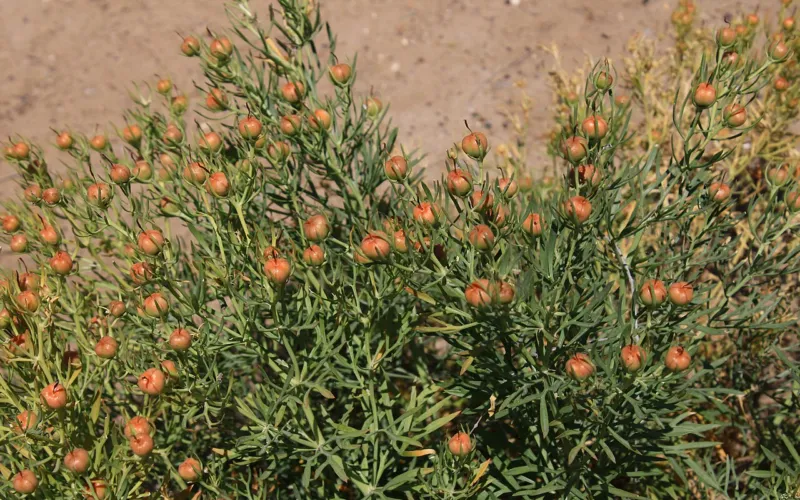

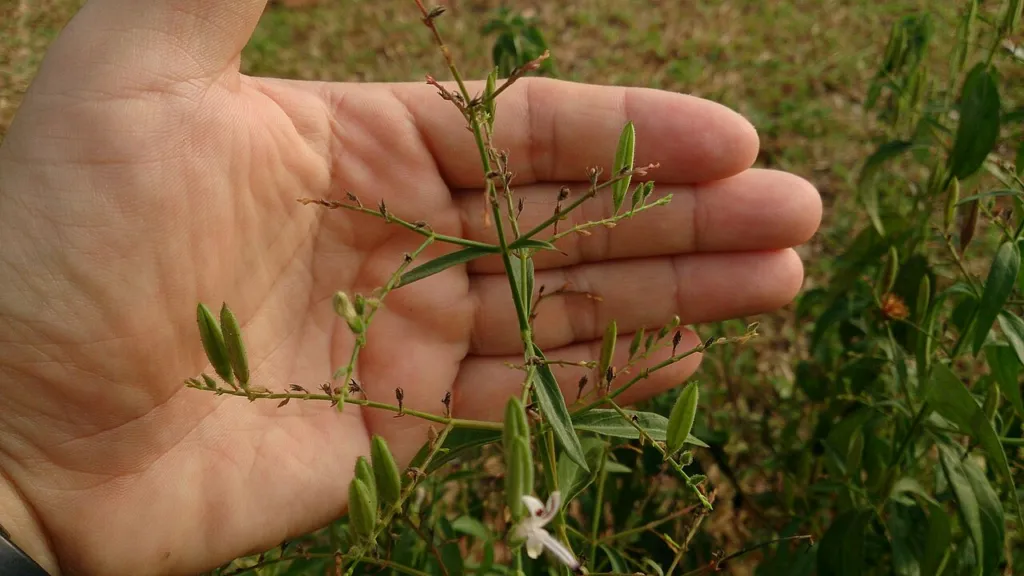
Cover: a sprig of andrographis (“king of bitters”) held above the growing crop. Photo: Mokkie · CC BY-SA 3.0 · Wikimedia Commons
For centuries, andrographis has been one of the bitterest remedies in the Indian and Chinese medicine chest, given for fevers, sore throats and bowel complaints. Traditional In Australia it became a winter staple in over-the-counter cold and flu and immune products. Since 2005 the TGA has received 287 reports of anaphylaxis linked to those products, one of them fatal (TGA supplementary report, 2026). Confirmed
In April 2026 the Therapeutic Goods Administration proposed removing Andrographis paniculata from the ingredients allowed in low-risk listed medicines. This is No. 3 in the Australian Institute of Pharmacognosy’s evidence-graded monograph series, written at submission depth because the review is live. It covers what the plant is, what the trials actually show, what the TGA found and why label warnings did not fix it, what the proposal would and would not change, and how to stay safe with product that may already be in your cupboard.
This article is educational. It is not medical, legal or regulatory advice, and nothing in it is a recommendation to buy, prepare or take andrographis.
1. Serious allergic reactions are documented. Medicines containing andrographis can cause anaphylaxis, a life-threatening allergic reaction. Reactions are usually rapid (most within 30 minutes) and unpredictable. They can happen on first use or after earlier trouble-free use, including in people with no allergy history (TGA updated safety review, 2026). Confirmed
2. If you already have a product at home. The TGA advises stopping the product and getting medical help if you notice any sign of an allergic reaction. If you have ever reacted to an andrographis product, avoid all of them, and avoid echinacea too if the product contained both. If you have had severe allergic reactions to anything, avoid andrographis products (TGA safety advisory, 2024). Confirmed Before taking any botanical drug, consult a degree-qualified herbalist with competencies and adequate training in pharmacognosy.
3. Legal status. Andrographis is not in the Poisons Standard. It is currently permitted in listed (AUST L) medicines, and the TGA has proposed removing it from that list; no final decision had been published as at 17/09/2026 (§9).
Emergency: for difficult or noisy breathing, throat or tongue swelling, wheeze, a hoarse voice, dizziness or collapse, call Triple Zero (000) immediately. For poisons advice, call the Poisons Information Centre on 13 11 26 (24 hours, Australia-wide).
| Botanical name | Andrographis paniculata (Burm.f.) Wall. ex Nees, Acanthaceae Confirmed §1 |
| Common names | Andrographis, king of bitters, green chiretta, kalmegh, kariyat, chuān xīn lián Traditional §1 |
| Part used | Aerial parts (herb, leaf); historically the stalks and root Attested §4 |
| Key constituents | Andrographolide and related ent-labdane diterpenoids; flavones Confirmed §5 |
| Traditional use | Fevers, colds, sore throat, dysentery; bitter tonic Traditional §4 |
| Best evidence | Modest relief of cold and sore-throat symptoms in small, low-quality trials Evidence suggests §7 |
| Main hazard | Anaphylaxis: 287 Australian reports to 31/12/2025, one fatal Confirmed §8 |
| Australian status | Permitted in listed medicines (removal proposed April 2026); not scheduled; naturalised in Queensland, not a prohibited or restricted plant Confirmed §9 |
| Pregnancy and breastfeeding | Avoid (precaution): no human safety data; animal fertility studies conflict Evidence suggests §10 |
- Confirmed Established in humans by trial, or an unambiguous analytical, chemical or official-record fact (for example, a regulator’s published figures).
- Evidence suggests Real published data, but preclinical, observational, small or not yet replicated in humans.
- Mechanism A plausible mechanistic or pharmacological inference, not an outcome.
- Traditional Historical, ethnobotanical or ritual use. Evidence of practice, not of efficacy.
- Attested A documentary fact attested in a named historical edition, such as a pharmacopoeia entry. A textual reading, not a claim about effects.
- AIP-observed Practitioner experience recorded by the Institute. A clinical observation, not trial evidence.
Every PubMed ID (PMID) links to its PubMed record and was checked against PubMed on 17/09/2026. Every chemical record was checked against PubChem, and every regulatory statement was checked against the regulator’s own document. Where a claim is widely repeated but could not be traced to a primary source, it is marked unsourced. The practitioner observation in §10 is labelled as such: it is AIP-observed clinical experience, not trial evidence.
What it is. Andrographis is an intensely bitter annual herb from India and Sri Lanka, with a long history in Ayurvedic and Chinese medicine for fevers, colds, sore throats and bowel complaints. Traditional It is recorded as naturalised in Queensland, but it is not a prohibited or restricted plant there. Confirmed
Does it work? Across more than 30 trials, it seems to ease cold and sore-throat symptoms modestly. Evidence suggests The trials are small and often poor, and the products vary, so this is not a firmly established benefit. The COVID-19 trials are mixed.
What went wrong. By 31/12/2025 the TGA had received 287 Australian reports of anaphylaxis linked to andrographis medicines, one fatal. Most reactions came within 30 minutes, and many happened on the first dose or after earlier trouble-free use. Echinacea, dose and extract type do not explain them. Confirmed A mandatory label warning since 2020, and a stronger warning on one product since 2024, did not reduce reports. Confirmed
What the TGA proposes. The TGA proposes removing andrographis from the ingredients allowed in low-risk listed medicines, which covers about 84 products. Consultation closed on 08/05/2026, and no final decision had been published by 17/09/2026. The proposal concerns listed medicines, not practitioner-compounded supply, and andrographis is not a scheduled poison.
What to do. Know the signs of anaphylaxis and call 000 if they appear. Do not take andrographis if you have ever reacted to it or have a history of severe allergy. Report reactions to the TGA. If andrographis is used at all, it should be used deliberately under a qualified practitioner, not picked up casually off a shelf. Consult a degree-qualified herbalist with competencies and adequate training in pharmacognosy.
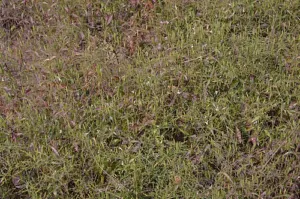
1. What it is called: names and taxonomy
Andrographis paniculata (Burm.f.) Wall. ex Nees belongs to the acanthus family, Acanthaceae. Confirmed The species was first described in 1768 by N. L. Burman as Justicia paniculata. Nees moved it to Andrographis in Wallich’s Plantae Asiaticae Rariores (1832), which is why both names turn up in older pharmacy literature (Flora of China). Attested Queensland’s WildNet database and the Atlas of Living Australia both use this accepted name (WildNet profile; Atlas of Living Australia). Confirmed
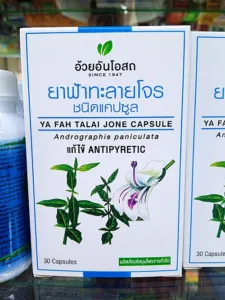
Few medicinal plants have as many names. In English it is andrographis, green chiretta (or chirata) and “king of bitters”. In Hindi and Bengali it is kalmegh, in the older Anglo-Indian pharmacopoeias kariyat or creyat, in Tamil nilavembu, in Malayalam kiriyath, in Chinese chuān xīn lián (穿心莲), in Thai fa talai chon and in Malay and Indonesian hempedu bumi and sambiloto. Traditional The TGA’s own documents call it “green chireta” and “king of bitters” (TGA decision notice, 2019; TGA safety advisory, 2024).
The name “chiretta” causes a real identification problem. True chiretta is Swertia chirayita, a bitter gentian from the Himalaya. The 1868 Pharmacopoeia of India already warned against confusing chiretta “with Kariyat, Andrographis paniculata” (Waring 1868). Attested Both are intensely bitter aerial parts traded under overlapping names, so the difference matters for quality control (§11).
| Rank | Name |
|---|---|
| Order | Lamiales |
| Family | Acanthaceae (acanthus family) |
| Genus | Andrographis Wall. ex Nees |
| Species | Andrographis paniculata (Burm.f.) Wall. ex Nees |
| Basionym | Justicia paniculata Burm.f. (1768) |
| Drug names | Andrographis herba (aerial parts); Chuanxinlian; Kalmegh |
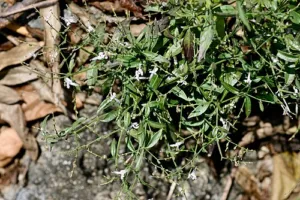
2. What it looks like: botanical description
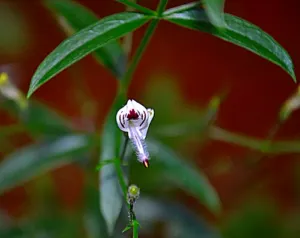
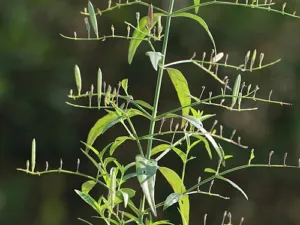
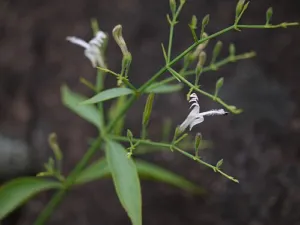
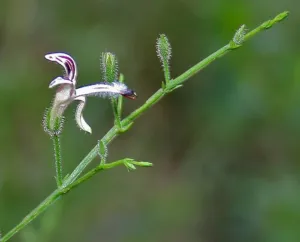
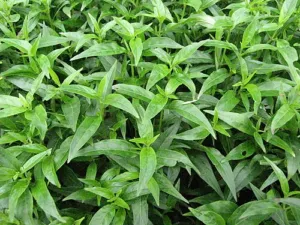
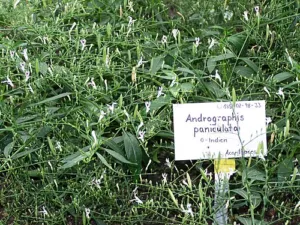
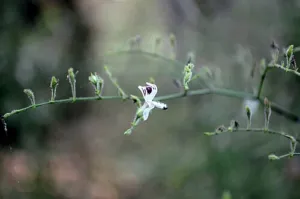
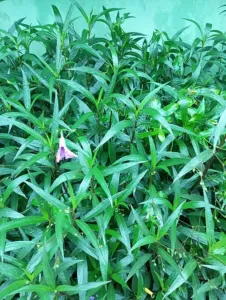
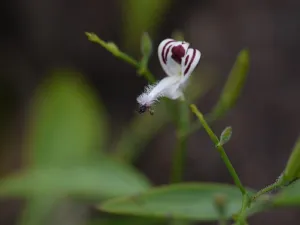
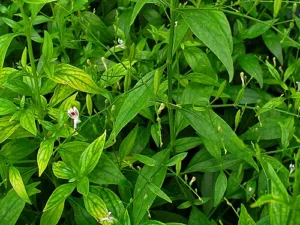
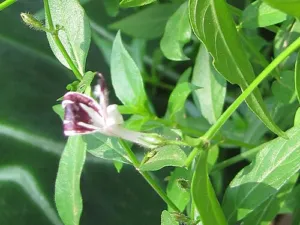
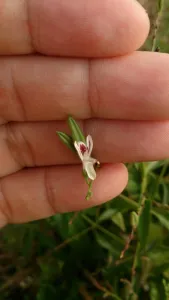
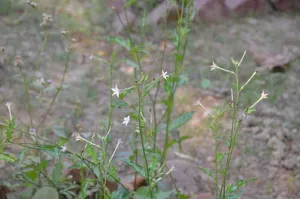
The Flora of China describes andrographis as a much-branched annual herb up to about 50 cm tall. It has four-angled, hairless stems and lance-shaped to narrowly elliptic leaves 1.5–7 cm long, tapering into a short stalk. The flowers sit in leafy terminal panicles of one-sided racemes. The corolla is white, 0.9–1.5 cm long and two-lipped, with the lower lip marked with purple dots. The fruit is a flattened, ellipsoid capsule 1.5–2 cm long holding about 12 wrinkled seeds. It flowers and fruits year-round in the tropics, and 2n = 50 (Flora of China). Confirmed Queensland Herbarium specimen notes from far north Queensland describe the same plant: an “erect subshrub to 0.7 m” with wiry stems and “2-lipped, white with purple markings” flowers (Atlas of Living Australia). Confirmed
Every part of the plant is intensely bitter. That bitterness is the “king of bitters” of the trade name, and it is due largely to the diterpene lactone andrographolide (§5). Confirmed
3. Where it grows, including its status in Australia
Andrographis is native to India and Sri Lanka. It is cultivated or naturalised across southern China and mainland and island South-East Asia, and in the Caribbean (Flora of China). Confirmed It is a crop plant in India, China and Thailand, where it supplies the national herbal medicine industries (§4).
Status in Australia and Queensland
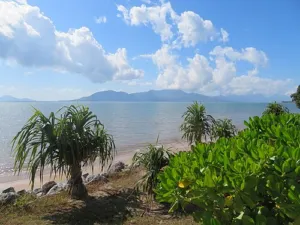
- Naturalised in Queensland. Queensland’s WildNet database (taxon 36292, checked 17/09/2026) gives the establishment status “Naturalised in QLD” and flags the species as a problem plant in the category “Environmental Weed”, with Queensland records from the Torres Strait (about 9.6°S) to south-east Queensland (about 27.7°S) (WildNet profile). Confirmed It is not native to Australia.
- Not a prohibited or restricted invasive plant. Andrographis does not appear on Queensland’s lists of prohibited or restricted invasive plants under the Biosecurity Act 2014 (Qld), as checked on 17/09/2026 (Business Queensland invasive plant lists). Confirmed That means no specific restriction applies to keeping it. The Act’s general biosecurity obligation still applies: a person dealing with a plant who knows, or ought reasonably to know, that it poses a biosecurity risk must take all reasonable and practical steps to prevent or minimise that risk. WildNet’s environmental-weed flag is relevant to that judgement. Local council pest-management plans can add requirements, so check with your council (for the Institute, the Cassowary Coast Regional Council).
- Where it is recorded. The Atlas of Living Australia held 195 occurrence records on 17/09/2026: 160 from the Northern Territory, 13 from Queensland and 4 from New South Wales. Queensland herbarium specimens come from the Torres Strait, the Cairns–Atherton area and south-east Queensland. A cluster of recent (2024–2026) community observations comes from Castle Hill, Townsville (Atlas of Living Australia). Evidence suggests No ALA record was listed for the Cardwell area on that date.
- Not a controlled or scheduled substance. Andrographis and andrographolide do not appear in the Poisons Standard (June 2026 instrument, in force from 01/06/2026) (Poisons Standard, June 2026). Confirmed It is not a narcotic, psychotropic or precursor substance, and we found nothing indicating that an Office of Drug Control import licence or permit applies to it. We did not check this against every schedule of the Customs (Prohibited Imports) Regulations 1956 for this article. Importing a medicine containing it is a separate TGA question. Importing seed or dried plant material is a separate Commonwealth biosecurity question: check the Department of Agriculture’s BICON conditions before importing anything.
4. Traditional and historical use
Andrographis has a long record in the medical traditions of South Asia and China. It has been used for fevers, coughs, colds and sore throats, for dysentery and “bowel complaints”, as a bitter tonic for poor appetite and convalescence, and for liver complaints. Traditional A 2017 systematic review opens by noting its traditional use “in Indian and Chinese herbal medicine for cough, cold and influenza” (PMID 28783743). The TGA likewise describes its use in Indian and Chinese traditional medicine “for conditions such as the common cold, flu and jaundice” (TGA consumer page, 2026). Traditional
Ayurveda and the Anglo-Indian pharmacopoeia
The clearest documented account in English is Waring’s Pharmacopoeia of India (London, 1868). Its entry for “ANDROGRAPHIS PANICULATA, Nees. KARIYAT” (pp. 161–162) makes the dried stalks and root officinal. It describes the drug as a “bitter tonic and stomachic, very analogous to Quassia in its action”, used “in general debility, in convalescence after fevers, and in the advanced stages of dysentery”. It gives a compound infusion (with orange peel and coriander) and a compound tincture. It also records the expressed juice of fresh leaves as “a common native domestic remedy in the bowel complaints of children” (Waring 1868). Attested That is evidence of 19th-century practice, not of efficacy. Waring himself noted that in one reported case series other remedies were given at the same time, so “it is doubtful how far the recoveries can be said to be due to the Andrographis”. Attested Few historical sources are that honest.
Chinese medicine
In Chinese materia medica the aerial parts (Andrographis Herba, chuān xīn lián) are classed as a bitter, cold herb that “clears heat and resolves toxicity”, and are used for sore throat, cough, fever and diarrhoea. Traditional The herb is also widely reported as an official article of the Pharmacopoeia of the People’s Republic of China. We did not check a specific edition for this article, so that point is unsourced here. China also developed semi-synthetic andrographolide derivatives (sulfonates and dehydroandrographolide succinate salts) as injectable medicines. These are a different product class from oral herbal preparations, with their own documented anaphylaxis record (§8) (PMID 35153776). Confirmed
Thailand and South-East Asia
Thailand lists andrographis on its National List of Essential Medicines for non-infectious diarrhoea and for respiratory tract infection (sore throat and common cold) (TGA updated safety review, 2026; PMID 27702690). Confirmed During the COVID-19 pandemic, Thai hospitals and markets distributed crude-powder capsules widely (TGA updated safety review, 2026). That large-scale exposure generated much of the modern pharmacovigilance data (§8).
5. What is in it: phytochemistry
The characteristic constituents are ent-labdane diterpenoids, most of them lactones. Four are used as quality markers in Thai research and in several pharmacopoeial methods: andrographolide, 14-deoxy-11,12-didehydroandrographolide, neoandrographolide (a glucoside) and 14-deoxyandrographolide (PMID 27702690; PMID 23320627). Confirmed The plant also contains flavones, among them methoxylated flavones such as 5-hydroxy-7,8-dimethoxyflavone (PubChem CID 188316), plus phenolic acids. Composition varies with plant part, growth stage and cultivation. Evidence suggests
- Organ and growth-stage variation. In Thai greenhouse and field studies, andrographolide peaked in leaves at the vegetative stage (43.16 mg/g in the field) or at the seed-forming stage (24.72 mg/g in the greenhouse). Flowers also held high levels, while 14-deoxyandrographolide dominated young leaves (PMID 23320627). Confirmed The practical consequence is that “andrographis” is not one chemical product. Harvest timing alone changes the profile.
- Commercial variation. Capsules on the Thai market contained 1.99–2.90% w/w andrographolide in crude-powder products and 2.84–16.27% in extract products. The four diterpenoids also dissolved very differently between products (PMID 38686639). Confirmed The TGA found Australian listed medicines using extracts at concentration ratios from 10:1 to 200:1, made with ethanol, methanol or water (TGA updated safety review, 2026). Confirmed
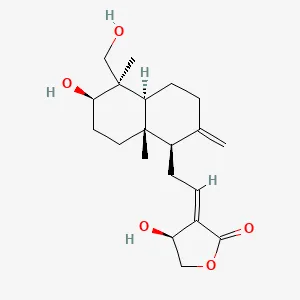
C20H30O5 · the principal bitter diterpene lactone
Depiction: PubChem CID 5318517 · public domain
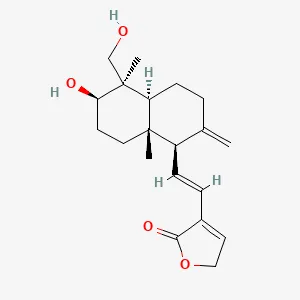
C20H28O4 · reaches the highest plasma levels
Depiction: PubChem CID 5708351 · public domain
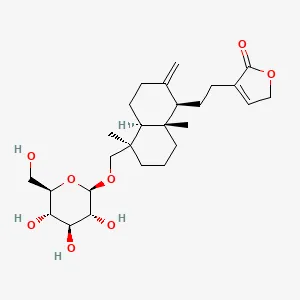
C26H40O8 · a diterpenoid glucoside
Depiction: PubChem CID 9848024 · public domain
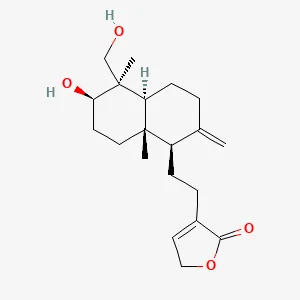
C20H30O4 · abundant in young leaves
Depiction: PubChem CID 11624161 · public domain
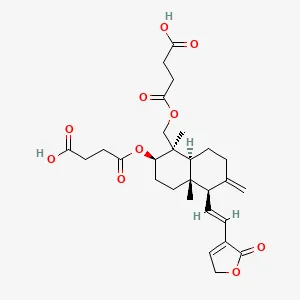
C28H36O10 · semi-synthetic, parent of Chinese injectables
Depiction: PubChem CID 6540717 · public domain
Structures, depictions and identifiers from PubChem (US National Library of Medicine), retrieved 17/09/2026. Dehydroandrographolide succinate is shown because potassium and sodium salts of it are among the Chinese injectable derivatives discussed in §8. It is not a constituent of the herb.
6. How it acts: pharmacology and pharmacokinetics
The anti-inflammatory side
The best-characterised action of andrographolide is suppression of NF-κB, the transcription factor behind much of the inflammatory response. In neutrophil-like HL-60 cells, andrographolide reduced NF-κB binding to DNA and cut COX-2 expression (PMID 15678086). Mechanism The related 14-deoxy-11,12-didehydroandrographolide reduced airway eosinophilia, IgE and mast-cell degranulation in a mouse asthma model (PMID 21598983). Evidence suggests These are cell and animal findings. They make an anti-inflammatory effect in respiratory infection plausible; they do not show one in people.
The mast-cell side: a mechanism for sudden reactions
The same molecules can also switch mast cells on. In a 2026 study in cells engineered to express the human receptor MRGPRX2, andrographolide and dehydroandrographolide (20 μM) increased calcium flux and released tryptase and β-hexosaminidase. A selective MRGPRX2 inhibitor blocked the effect (PMID 41677650). Evidence suggests MRGPRX2 is the receptor behind many “pseudo-allergic” drug reactions: mast cells degranulate directly, with no antibody (IgE) and no prior sensitisation needed.
That fits three things seen in people. Many Australian reactions happened on first exposure (§8). In five Australian adult cases presented as a conference abstract at the 2024 ASCIA meeting, skin testing was done in four and was negative in all four. One of those four patients had anaphylaxis again on re-challenge. The TGA summarises this abstract, which has limited data (TGA updated safety review, 2026). And the TGA’s clinical immunologist advised that negative skin tests “suggest this compound causes reactions by an IgE-independent mechanism” (TGA updated safety review, 2026). Mechanism The TGA’s toxicology review reached a similar, cautious conclusion: in vitro data “suggest a pseudoallergy and anaphylactic potential of some components”, while other components appear anti-inflammatory (TGA updated safety review, 2026). Evidence suggests The unanswered question is whether the free concentrations reached after an oral dose are enough to trigger MRGPRX2 (next section).
Pharmacokinetics
Blood levels of the diterpenoids are low after oral dosing. In 20 healthy Thai volunteers taking capsules three times daily, 14-deoxy-11,12-didehydroandrographolide reached a higher peak (Cmax 44.89 ng/mL) than andrographolide, although the dose contained more andrographolide (PMID 27702690). Confirmed With a high-dose ethanolic extract (60 or 120 mg andrographolide per dose), peak andrographolide levels were only 6–15 μg/L, and doubling the dose barely raised them. Exposure was clearly non-linear (PMID 39760215). Confirmed In people, andrographolide appears in urine partly as glucuronide conjugates (PMID 15644451). Confirmed
Those plasma levels are well below the 20 μM (about 7 mg/L for andrographolide) used in the MRGPRX2 cell study. That gap cuts both ways. It argues against a simple concentration-driven mechanism, but gut and mucosal mast cells see much higher local concentrations than blood does. Nobody has measured this in people. Mechanism
Interactions (mostly preclinical)
- Platelets. Andrographolide and 14-deoxy-11,12-didehydroandrographolide inhibited thrombin-induced platelet aggregation in vitro. The authors advised caution in people with bleeding disorders (PMID 17081514). Evidence suggests Whether this adds to the effect of anticoagulant or antiplatelet medicines in people is untested. Mechanism
- Drug metabolism. An andrographis extract and andrographolide inhibited several cytochrome P450 activities in rat and human liver preparations, with species differences (PMID 18053665). Evidence suggests A 2015 review concluded that the data were insufficient to class the extracts or diterpenoids as in vitro inhibitors of CYP1A2, CYP2C9 or CYP3A4, and that no induction had been shown in human cells (PMID 25156015). Evidence suggests An extract altered theophylline pharmacokinetics in rats (PMID 20096675). Evidence suggests In rats, five days of a fixed andrographis and Siberian ginseng extract (about 17 times the human andrographolide dose) had no significant effect on warfarin blood levels and practically none on prothrombin time (PMID 16635739). Evidence suggests No clinically significant interaction has been established in people, and none has been properly tested. Anyone taking warfarin, other narrow-margin medicines or immunosuppressants should have the combination reviewed by a qualified practitioner before starting. Mechanism
- NSAIDs. The main practical interaction is a risk factor rather than a pharmacokinetic effect. The TGA’s expert adviser identified non-steroidal anti-inflammatory medicines, concurrent viral infection, exercise and alcohol as recognised cofactors that make allergic reactions more likely or more severe (TGA updated safety review, 2026). Confirmed All four are common in someone treating a cold.
7. What the trials show: upper respiratory tract infections
Andrographis has more randomised trials behind it than most herbs sold for colds. The problem is their quality, not their number.
Systematic reviews
- Coon and Ernst (2004). This review included seven double-blind controlled trials (n = 896), all scoring at least 3/5 on the Jadad scale. It concluded that the data “suggest that A. paniculata is superior to placebo in alleviating the subjective symptoms of uncomplicated upper respiratory tract infection”, with “preliminary evidence of a preventative effect” (PMID 15095142). Evidence suggests
- Poolsup et al. (2004). This review pooled three trials (433 patients) and found that andrographis, alone or combined with Siberian ginseng (Eleutherococcus senticosus) extract, “may be more effective than placebo” (PMID 14748896). Evidence suggests
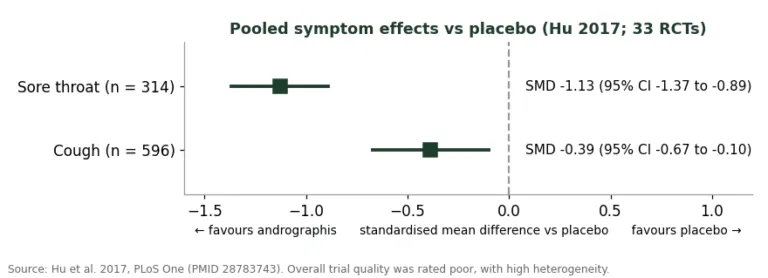
- Hu et al. (2017). The largest review so far included 33 RCTs with 7,175 patients, in English- and Chinese-language literature. Compared with placebo, andrographis improved cough (SMD −0.39, 95% CI −0.67 to −0.10) and sore throat (SMD −1.13, −1.37 to −0.89), and it shortened symptom duration compared with usual care. The authors rated overall trial quality as poor. They noted that products “seldom reported manufacturing or quality control details” and that findings “should be interpreted cautiously owing to poor study quality and heterogeneity” (PMID 28783743). Evidence suggests A correction to this paper was later published (PMID 30427943).
Individual trials worth knowing
- A Thai trial in 152 adults with pharyngotonsillitis compared paracetamol with andrographis powder at 3 g or 6 g daily. At day 3, paracetamol and the high dose each relieved fever and sore throat significantly better than the low dose. By day 7 the groups did not differ (PMID 1797953). Evidence suggests There was no placebo arm.
- Several placebo-controlled trials of a standardised andrographis extract, mostly as a fixed combination with Siberian ginseng, reported better symptom scores in uncomplicated upper respiratory infection and sinusitis. One pilot trial of an andrographis dried extract in 107 students at a rural school reported fewer colds over three winter months (PMID 11081985; PMID 12487322; PMID 23195395; PMID 34765519). Evidence suggests Most came from a small number of research groups, several with manufacturer-affiliated authors, and none was large.
- Trials of a standardised leaf extract (200 or 400 mg/day) reported symptom benefit over placebo (PMID 20092985). In the most recent, a 300-participant phase III trial (2023), the benefit showed at day 3 but not at days 5 or 7 (PMID 36842634). Evidence suggests
COVID-19
The COVID-19 trials are mixed. A Thai placebo-controlled trial (180 mg/day andrographolide for 5 days) did not reduce disease progression in mild cases (PMID 39005565). An add-on trial with favipiravir found no extra clinical or virological benefit (PMID 37625206). A combination-extract trial reported fewer cases progressing to severe disease (PMID 37765004). A 2025 meta-analysis of six RCTs (660 adults) found no significant effect on fever or cough resolution compared with antivirals or supportive care (PMID 40822451). Evidence suggests A 2026 network meta-analysis judged that andrographis extract “probably” reduced hospital admission for patients at moderate risk (moderate certainty; risk difference −15 per 1,000, 95% CI −24.9 to 12.3, an interval that includes no effect), using progression to severe disease as a proxy. It found no compelling evidence of any effect on mortality (PMID 42735469). Evidence suggests
Other indications
In a 224-patient trial in mild-to-moderate ulcerative colitis, an andrographis extract at 1,800 mg/day improved clinical response at week 8 (60% vs 40% on placebo). Remission rates did not differ significantly (PMID 23044768). Evidence suggests Andrographis is a candidate medicine there, not an established one.
Across three decades of trials, andrographis shows a modest, fairly consistent symptomatic benefit in uncomplicated upper respiratory tract infection, largest for sore throat. Evidence suggests The evidence is not “Confirmed” in this article’s sense: the trials are small, often industry-linked and heterogeneous, the products differ, and quality reporting is poor. The TGA does not evaluate efficacy for listed medicines at all (TGA updated safety review, 2026). The TGA’s immunology adviser described the evidence of benefit as “equivocal”, and the RACGP’s quality-care committee chair called it “limited” (TGA updated safety review, 2026; newsGP, 09/04/2026). Either way, a modest benefit for a self-limiting illness is what has to be weighed against the harm in §8.
8. The anaphylaxis signal: what the TGA found
On 08/04/2026 the TGA published an updated safety review, with adverse-event data to 31/12/2024, plus a supplementary report with data to 31/12/2025 (TGA updated safety review, 2026; TGA supplementary report, 2026; TGA consumer page, 2026). The numbers below come from those two documents. Confirmed Confirmed here means these are the regulator’s reported figures. Spontaneous reports establish a signal and its pattern, not an incidence rate.
The headline numbers (to 31/12/2025)
- 1,368 Australian adverse-event reports for medicines containing andrographis. The commonest reaction terms were loss of taste (ageusia, 325), anaphylactic reaction (277) and altered taste (dysgeusia, 236).
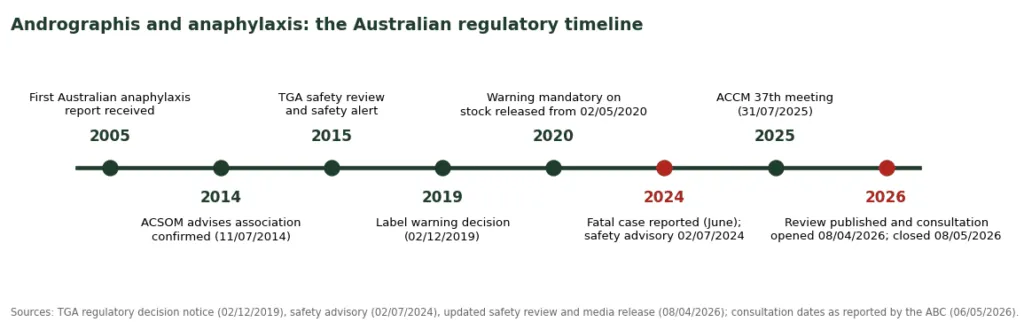
- 287 reports coded specifically as anaphylaxis since the first in 2005. 217 (76%) of them came from 2019 onwards, and one was fatal (reported in June 2024).
- Searches using the broader standardised MedDRA queries returned 728 anaphylaxis-related and 751 hypersensitivity-related reports, so the narrow count probably understates the problem.
- The 287 reports involved 48 trade names. Five products from a single sponsor, sharing one formulation and trade name, accounted for 189 (66%). The TGA links this mainly to their far larger supply volume.
Is it the andrographis, or the echinacea?
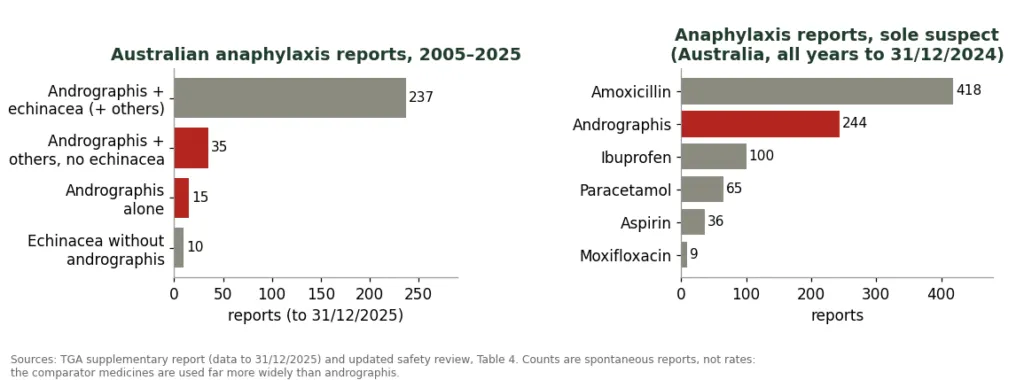
Most andrographis products sold in Australia also contain echinacea, which is itself a recognised allergen in Australia (PMID 11814277). The TGA tested this directly (TGA updated safety review, 2026; TGA supplementary report, 2026). Confirmed
- 237 of the 287 reports (83%) involved products containing both herbs, 35 (12%) involved andrographis combinations without echinacea, and 15 (5%) involved andrographis as the only active ingredient.
- Over the same 20 years, echinacea products without andrographis produced only 10 anaphylaxis reports.
- In the TGA’s supply analysis, products combining andrographis with echinacea and other actives made up about 98% of the units supplied. Once supply was accounted for, single-ingredient andrographis products carried a higher share of anaphylaxis cases (0.74%) than of supply (0.14%).
- Internationally, WHO VigiBase shows disproportionate reporting for andrographis with anaphylactic reaction (IC025 3.5) and anaphylactic shock (2.3). Echinacea shows only a weak signal, with E. purpurea and anaphylactic shock (1.1). Of the registered comparator medicines the TGA tabled, none scored higher than andrographis for anaphylactic reaction: moxifloxacin 2.4, amoxicillin 2.2, ibuprofen 1.6.
The TGA concluded that echinacea “was not the primary causative factor”. Confirmed Thai pharmacovigilance data point the same way, since single-herb andrographis powder is the norm there. A national database review (2001–2012) found 106 hypersensitivity reports with andrographis as the sole suspect. 88% of those patients had no documented history of drug allergy, and 13 reactions were critical: five cases of anaphylactic shock, four anaphylactic reactions and four angioedema, at doses from 352 to 1,750 mg (PMID 25539642). Confirmed A second Thai analysis (2002–2013 data) found a significant reporting odds ratio for andrographis and anaphylactic shock: crude ROR 2.32 (95% CI 1.03–5.21), and adjusted ROR 2.68 (1.19–6.04) as reported in the TGA review. The population attributable risk was very low (0.05%) (PMID 24945744; TGA updated safety review, 2026). Evidence suggests Earlier WHO VigiBase studies (data to 2014), as summarised by the TGA, attributed 4.7% of reported acute hypersensitivity reactions to herbal medicines in children to andrographis. In all ages it was the third most frequently reported herb for immediate allergy-like reactions (5%), although disproportionate reporting was not shown at that time (PMID 28846157; PMID 26936182; TGA updated safety review, 2026). Evidence suggests
What the reactions look like
The TGA reviewed the narratives of 171 Australian cases (2016–2024) in which an andrographis product was the only suspect medicine (TGA updated safety review, 2026). Confirmed
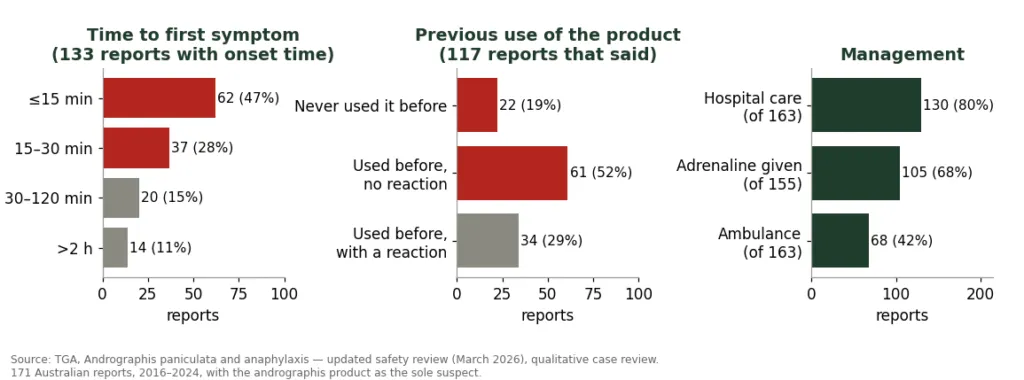
- Fast onset. 74% of reactions began within 30 minutes, and 47% within 15 minutes.
- Unpredictable. 71% occurred on first use (19%) or after previous uneventful use (52%). Only 29% had any earlier reaction to warn them.
- Serious. 80% were managed in hospital, 68% needed adrenaline and 42% needed an ambulance.
- No clear risk group. Fewer than half (47%) had any allergy history and 23% had asthma. 95% of cases with a recorded age were adults aged 18–65, and 11 were adolescents aged 12–17.
Does dose or extract type matter?
For the 20 highest-selling Australian products, the TGA found no pattern by extract manufacturer, extract ratio (14:1 to 200:1), solvent, plant part (herb, herb top, leaf, “whole plant”) or andrographolide content per dose (below 20 to 140 mg) (TGA updated safety review, 2026). Confirmed A 2021 meta-analysis likewise found no difference in serious adverse events above or below 120 mg/day andrographolide. That analysis rested on only five serious events, and its pooled serious-event incidence was 0.02 per 1,000 trial patients, far too few patients to detect a rare reaction (PMID 33372366). Evidence suggests A phase I dose-escalation study of andrographolide was stopped at six weeks because of adverse events, including one anaphylactic reaction that occurred after the dose was increased (PMID 10925397; TGA updated safety review, 2026). Evidence suggests The TGA also recorded a reaction to a traditional liquid extract, and the Thai reactions involved plain powdered herb. No preparation type, including traditional ones, has been shown to be free of the risk. Confirmed
Chinese injectable andrographolide derivatives have a much worse record. A systematic review found 55 patients with life-threatening anaphylactic shock and three deaths, with causation attributed to the injections (PMID 35153776). Confirmed Their relevance to oral herbal products is uncertain, but they show the molecule class can trigger anaphylaxis in people.
How often does it happen?
Nobody knows exactly. From sponsor supply data, the TGA’s tentative estimate is roughly one anaphylaxis event per 1,000 to 10,000 containers supplied (0.01–0.1%), with major caveats about under-reporting and incomplete supply records. It judged that at current volumes further cases “can be considered certain to occur” (TGA updated safety review, 2026). Evidence suggests Reporting spiked in mid-2024 after the fatal case and the safety advisory, then settled back in 2025 to 2022–2023 levels, which suggests under-reporting before then (TGA supplementary report, 2026). Confirmed
9. Why label warnings did not fix it, and what the TGA proposes
How andrographis is regulated now
Andrographis is permitted in listed medicines (AUST L) under the Permissible Ingredients Determination. Listed medicines are low-risk products. They may use only pre-approved ingredients and low-level indications, and the TGA does not evaluate their efficacy before they are sold. At the time of the review, about 84 listed medicines on the ARTG contained andrographis, mostly with cold, flu or immune-support indications. Only eight had indications unrelated to viral illness or immune support (TGA updated safety review, 2026). Confirmed Since 02/05/2020 their labels have had to warn that andrographis “may cause allergic reactions in some people”, and they must also carry a taste-disturbance warning (TGA decision notice, 2019; TGA updated safety review, 2026). Confirmed Andrographis is not in the Poisons Standard (§3).
Why the TGA says warnings cannot work
- Timing. Most reactions start within 30 minutes and progress rapidly. The TGA noted that “for consumers experiencing these symptoms, the label warning becomes irrelevant”. Confirmed
- No one to warn. A warning aimed at people with allergies or asthma would at most have reached fewer than half of the cases. One aimed at people who had reacted before would have reached under a third. Confirmed
- A stronger warning was tried. In July–August 2024 one sponsor put a prominent front-of-pack warning in contrasting text on its product. Anaphylaxis reports for that product in 2025 were no lower than in 2022–2023 (TGA supplementary report, 2026). Confirmed The TGA also notes that this medicine is advertised as supplied only on a consultation basis, in pharmacies, health food stores or clinics. It adds that it is not known whether the stronger warning affected supply and use (TGA supplementary report, 2026). Confirmed So neither the stronger warning nor the consultation-only channel described in its advertising has yet been shown to reduce reports.
- The indication is itself a risk factor. These products are taken during viral infections, often alongside anti-inflammatory painkillers, and both are cofactors for allergic reactions. Early mild reactions such as rash and flushing are easily mistaken for the illness, so people keep taking the product. Mechanism
- Education fades. Reporting rose after the 2024 alerts from the TGA, the Australasian Society of Clinical Immunology and Allergy (ASCIA), Allergy & Anaphylaxis Australia and NSW Health, but the effect was not sustained. Evidence suggests
- Carrying adrenaline is not “low risk”. Of the patients given adrenaline whose previous use was recorded, 72% reacted on first use or after earlier uneventful use. Carrying an auto-injector after a first reaction would therefore have covered at most 28% of them. In any case, a medicine that needs an auto-injector nearby is not consistent with the listed-medicine framework (TGA updated safety review, 2026). Confirmed
The Advisory Committee on Complementary Medicines (37th meeting, 31/07/2025) agreed that the reactions were “sudden and unpredictable”. It also agreed that stronger labels, formulation limits or more education “are unlikely to mitigate the risk” (TGA updated safety review, 2026). Confirmed
The proposal: what it would change
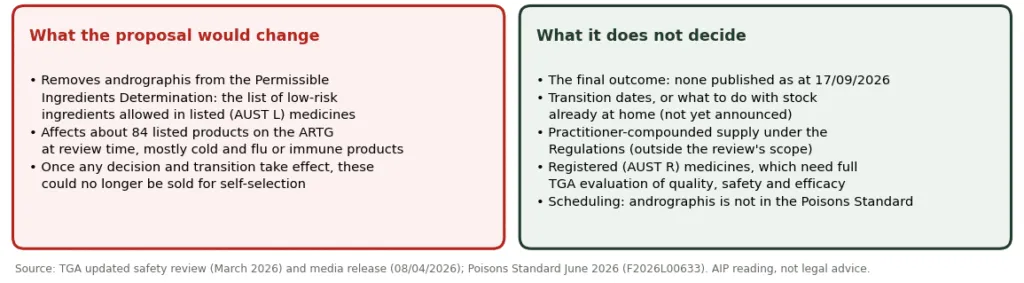
The TGA proposes to remove andrographis from the list of permitted ingredients in listed medicines. It opened consultation on 08/04/2026, inviting submissions from consumer groups, clinicians, affected sponsors and industry bodies (TGA media release, 08/04/2026). Confirmed The consultation was due to close on 30/04/2026 and was extended to 08/05/2026 (ABC News, 06/05/2026). Confirmed As at 17/09/2026 we could find no published final decision, implementation date or transition arrangement. The TGA has said all responses will be considered before any decision is made, and has also noted that cancellation and recall are regulatory actions it “may” consider if warranted (TGA media release, 08/04/2026; ABC News, 06/05/2026). Confirmed
What it would not change
- It is about listed medicines. The Permissible Ingredients Determination governs AUST L products. A medicine containing andrographis could still, in principle, be registered (AUST R), but that means a full TGA evaluation of quality, safety and efficacy. The review states that “higher risk medicines must be registered” (TGA updated safety review, 2026). Confirmed
- Practitioner-compounded medicines are outside the review’s scope. The Therapeutic Goods Regulations exempt medicines that are dispensed or extemporaneously compounded for a particular person, for therapeutic application to that person, from the requirement to be included in the ARTG (Schedule 5) (TGA compounding guidance). Herbalists and naturopaths who prepare herbal preparations on premises they occupy, for a particular person after consulting that person, have a related manufacturing exemption. The same TGA guidance says compounded medicines cannot be advertised to the public (TGA compounding guidance). The review says expressly that “implications for the use of Andrographis by traditional practitioners is outside the scope of this safety review” (TGA updated safety review, 2026). Confirmed Whether the TGA will take further action there is not stated. This is the Institute’s reading of public documents, not legal advice.
- It does not recall what is already in your cupboard. No recall had been announced as at 17/09/2026. The TGA’s current advice (next section) applies to products you already have.
10. Using andrographis responsibly: safety in practice
The TGA lists these as signs of anaphylaxis: difficult or noisy breathing; swelling of the tongue; swelling or tightness in the throat; wheeze or persistent cough; difficulty talking or a hoarse voice; persistent dizziness or collapse; becoming pale and floppy (in young children); and abdominal pain or vomiting (TGA consumer page, 2026).
If you see these, call Triple Zero (000) straight away. ASCIA’s first aid for anaphylaxis is: lay the person flat and do not let them stand or walk (if breathing is difficult, let them sit with legs outstretched; hold young children flat, not upright; if unconscious or pregnant, place them in the recovery position, on the left side if pregnant); give an adrenaline auto-injector if one is available; phone 000; further adrenaline may be given after 5 minutes if there is no response; start CPR if the person is unresponsive or not breathing normally. If in doubt, give adrenaline (ASCIA first aid for anaphylaxis). Follow the person’s ASCIA Action Plan if they have one.
Milder signs (rash, hives, itch, flushing, swelling of the lips or eyes): stop the product immediately and get prompt medical advice, because the TGA reports that mild reactions have been followed by severe ones (TGA safety advisory, 2024; TGA consumer page, 2026). For poisoning or accidental-ingestion advice, call the Poisons Information Centre on 13 11 26 (24 hours, Australia-wide).
Who should not take andrographis
- Anyone who has had any allergic reaction (rash, itch, hives, swelling, flushing) after a product containing andrographis should avoid all andrographis products. If the product also contained echinacea, avoid both herbs (TGA safety advisory, 2024). Confirmed
- Anyone with a history of severe allergy or anaphylaxis to any trigger should avoid andrographis (and echinacea), as the TGA advises (TGA safety advisory, 2024). Confirmed
- People without reliable, fast access to emergency care. The TGA’s consumer advice is to be cautious in this situation (TGA safety advisory, 2024); the Institute’s view is that such people are better not starting andrographis at all. The TGA review notes that a label warning “is also not helpful for people who do not have quick access to emergency treatment including adrenaline”, and that reactions have occurred after previous trouble-free use (TGA updated safety review, 2026; TGA safety advisory, 2024). Confirmed In the Institute’s view this weighs heavily in rural and remote Australia, including our own region. Mechanism
- Pregnancy, breastfeeding and conception. There are no human safety data in pregnancy or breastfeeding, and the TGA documents do not address either. Confirmed The animal data conflict. Female mice fed the dried herb (2 g/kg/day for six weeks) failed to become pregnant, against 95% of controls (PMID 2818412). Andrographolide disrupted mouse egg maturation in vitro at 5–20 μM (PMID 28420479). In pregnant rats, by contrast, a standardised leaf extract (200–2,000 mg/kg for the first 19 days) did not change plasma progesterone (PMID 10439479). Evidence suggests In male rats, one study of the leaf powder reported arrested sperm production (PMID 2401516), while two studies of standardised extracts at up to 1,000 mg/kg/day found no testicular or fertility effects, one of them from an extract manufacturer’s research centre (PMID 9421258; PMID 19636073). Evidence suggests The herb is also widely said to be avoided in pregnancy in traditional practice (not verified in a primary source for this article). Traditional On a precautionary basis: avoid it in pregnancy and breastfeeding, and while trying to conceive.
- Children and adolescents. Eleven Australian cases were in adolescents aged 12–17, and in WHO data andrographis accounted for 4.7% of reported immediate allergy-like reactions to herbal medicines in children (TGA updated safety review, 2026). Confirmed Some trials in the 2017 meta-analysis enrolled children, but no trial was large enough to detect a rare reaction (PMID 28783743). Evidence suggests Children and adolescents may not recognise or report the early signs, so the Institute’s view is that andrographis should not be given to them outside qualified supervision. Mechanism
- Use extra caution if you have a bleeding disorder or take anticoagulant or antiplatelet medicines (§6, preclinical signal). Take care too with NSAIDs, alcohol or strenuous exercise around the time of a dose (§9). Mechanism
Other adverse effects
Trial participants mostly report gastrointestinal upsets (nausea, diarrhoea, abdominal pain) and skin reactions (PMID 33372366). Confirmed In Australia, loss or distortion of taste dominates the reports: ageusia (325) and dysgeusia (236) are two of the three commonest reaction terms, which is why labels carry a taste warning (TGA supplementary report, 2026). Confirmed Mild, transient liver-enzyme rises were noted in some COVID-19 trials (PMID 40822451). Evidence suggests
Report it
If you think a medicine containing andrographis has caused a reaction, report it to the TGA at tga.gov.au/safety/reporting-problems. Consumers and practitioners can both report, and every report strengthens the signal (TGA consumer page, 2026). The review found that some people were only diagnosed after a second reaction, and some were told to carry adrenaline for life with no cause identified. Those gaps are why reporting matters. Confirmed
Qualified supervision, not the supermarket shelf
The balanced conclusion from the evidence is not that andrographis is useless or that it should never be used. It is a pharmacologically active drug with a modest evidence base and a rare but serious, unpredictable risk, and it should be used deliberately rather than casually. Before taking any botanical drug, consult a degree-qualified herbalist with competencies and adequate training in pharmacognosy. A properly trained practitioner can take an allergy and medication history, weigh whether andrographis is warranted at all, choose and document the preparation, advise on the first dose and access to emergency care, and report any reaction.
Dr Luke Iggulden, the Institute’s Chief Executive Officer and Chief Scientific Officer, reports that he uses andrographis regularly in clinical practice and finds it very effective when it is used appropriately, meaning after a consultation, for a suitable patient, with a suitable preparation. AIP-observed This is one practitioner’s clinical experience, recorded as a practitioner observation. It is not a claim about any product, and it is not an offer to supply one. It is not a controlled study and does not change the grading of the trial evidence in §7 or the safety findings in §8. Andrographis also grows on Institute property in Cardwell, where Dr Iggulden reports it as naturalised, consistent with its recorded status in Queensland, where WildNet also lists it as an environmental weed (§3). AIP-observed The Institute prepares extracts from all of the plant material it harvests there, so none is wasted. Because WildNet flags the species as an environmental weed, a stand like this carries the Queensland general biosecurity obligation (§3). Nothing in this article offers andrographis or any preparation of it for sale or supply.
11. Quality, identity and adulteration
- Substitution. A DNA-barcoding study of Thai market products found that three of fifteen samples did not contain the labelled species. Andrographis paniculata and the look-alike Rhinacanthus nasutus had been swapped for each other (PMID 26011474). Confirmed A related method confirmed the correct species in ten other commercial products (PMID 27041863). Confirmed Name confusion with true chiretta (Swertia chirayita) has been flagged since the 19th century (Waring 1868). Attested
- Chemical variability. Andrographolide content ranges widely between crude and extract products, and so does dissolution (§5) (PMID 38686639). Confirmed Listed medicines are not required to declare andrographolide content on the ARTG (TGA updated safety review, 2026). Confirmed The United States Pharmacopeia (an overseas standard that does not govern Australian products) limits 14-deoxy-11,12-didehydroandrographolide to no more than 15% in powdered extract, for reasons the TGA called unclear (TGA updated safety review, 2026). Confirmed
- What good practice looks like. Good practice means macroscopic and microscopic identity (four-angled stems, lanceolate leaves, bitter taste), an HPLC fingerprint of the four marker diterpenoids, a stated plant part and harvest stage, and DNA confirmation for powders. Those controls ensure the product is what it says. They do not, on current evidence, reduce the anaphylaxis risk (§8). Evidence suggests
Discussion: conclusions, hypotheses and research still required
What the evidence supports
- Andrographis has a long, documented history of use as a bitter tonic and fever and bowel remedy in India, and as a heat-clearing herb in China. Traditional Attested
- Across small and often low-quality trials, it appears to give a modest symptomatic benefit in uncomplicated upper respiratory tract infection, most clearly for sore throat. Its benefit in COVID-19 is unproven. Evidence suggests
- Andrographis-containing medicines carry a genuine, reproducible anaphylaxis signal in Australia (287 reports, one death), in Thailand and in WHO global data. The signal is not explained by echinacea, dose, extract type or plant part, and it often appears on first use or after trouble-free use. Confirmed
- Label warnings, including a strengthened one, have not reduced reports. Confirmed On that basis, the TGA’s conclusion that andrographis is inconsistent with a self-selection, low-risk framework follows from its data.
Hypotheses and musings
- Some reactions may be MRGPRX2-mediated pseudo-allergy triggered by the diterpene lactones. That would explain first-dose reactions and negative skin tests. Mechanism If so, the reactions would not depend on sensitisation, and basophil or mast-cell activation assays could predict which extracts are most reactive.
- Infection and NSAIDs as cofactors may lower the threshold for mast-cell activation, making the product’s main indication part of its risk. Mechanism
- Given the non-linear pharmacokinetics, local gut exposure rather than plasma concentration may drive reactions. Mechanism
- Supervised use (history-taking, first dose where emergency care is available, avoidance of cofactors) may reduce serious outcomes even if it cannot prevent reactions. The TGA itself reasons that use only where emergency services are readily available could reduce serious outcomes without significantly reducing case numbers, and that this is not appropriate for a low-risk listed medicine (TGA supplementary report, 2026). No data yet test this, and the product that carried the strengthened warning, which had a high number of reports, was already advertised as available only after a consultation (§9). Mechanism
Where research should begin
- Immunology and toxicology: basophil activation tests and MRGPRX2-transfected mast-cell assays using the real commercial extracts and the four marker diterpenoids, with blood from people who have reacted and from matched tolerant users. Measure serum tryptase in acute cases.
- Pharmacovigilance: linkage of TGA reports to emergency-department anaphylaxis coding, to estimate a true incidence and to test whether concurrent NSAIDs and infection raise the risk.
- Clinical research: a large, independent, pre-registered, placebo-controlled trial of a chemically characterised preparation in upper respiratory infection, powered for patient-important outcomes and for adverse events. This requires ethics approval.
- Phytochemistry and quality: an Australian market survey (HPLC fingerprint plus DNA barcoding) of listed and practitioner-supplied material, relating the diterpenoid profile to report history.
- Botany and biosecurity: voucher specimens of Queensland naturalised populations, including the Cardwell stand, lodged with the Queensland Herbarium; chemotype comparison with cultivated Asian material; and monitoring of spread (for example, Castle Hill, Townsville).
- Regulatory science: publication of the consultation outcome and its reasoning. Guidance for practitioners and pharmacists on safe handling of existing stock, and on practitioner-compounded supply, if the listing change goes ahead.
About the Australian Institute of Pharmacognosy and this series
The Australian Institute of Pharmacognosy is a clinic and research laboratory in Cardwell, far north Queensland, studying medicinal plants and natural products to the same evidentiary standard as any other branch of pharmacology: traditional knowledge taken seriously, and tested honestly. Visit the Institute at australian-pharmacognosy.org.
Series: AIP Monographs. Previous: No. 2, Syrian rue (Peganum harmala) · No. 1, rosary pea (Abrus precatorius). Follow the series for a new evidence-graded monograph each morning.
Corrections: if you find an error or a source we have missed, write to the Institute at our contact form. We would rather correct a claim than repeat it. If you are preparing a submission to the TGA, you are welcome to cite this article. The TGA’s own documents remain the primary record.
Head of Education and Research
Australian Institute of Pharmacognosy
Cardwell QLD, Australia
australian-pharmacognosy.org · our contact form
Suggested citation: Ridley T. Andrographis (Andrographis paniculata (Burm.f.) Wall. ex Nees): an evidence-graded monograph and review of the Australian anaphylaxis signal. AIP Monograph No. 3. Cardwell (QLD): Australian Institute of Pharmacognosy; 2026.
Educational content only; not medical, legal or regulatory advice. Regulatory information reflects TGA publications and the Poisons Standard as read on 17/09/2026 and may change.
References
61 references: tap to open
Listed in order of first citation. All 45 PMIDs verified against PubMed on 17/09/2026; regulatory and botanical records accessed the same day.
- Therapeutic Goods Administration. Andrographis paniculata (Andrographis) and anaphylaxis: supplementary report, updated adverse event figures to 31 December 2025. Version 1.0. Canberra: TGA; March 2026. https://www.tga.gov.au/sites/default/files/2026-04/andrographis-paniculata-andrographis-anaphylaxis-supplementary-report.pdf
- Therapeutic Goods Administration. Andrographis paniculata (Andrographis) and anaphylaxis: updated safety review with adverse event data to 31 December 2024. Version 1.0. Canberra: TGA; March 2026 (published 08/04/2026). https://www.tga.gov.au/sites/default/files/2026-04/andrographis-paniculata-andrographis-anaphylaxis-updated-safety-review.pdf
- Therapeutic Goods Administration. Medicines containing Andrographis paniculata: safety advisory. 02/07/2024. https://www.tga.gov.au/safety/safety-monitoring-and-information/safety-alerts/medicines-containing-andrographis-paniculata-safety-advisory
- Hu J, Deng Y, Daniel TF. Andrographis paniculata. In: Wu ZY, Raven PH, Hong DY, eds. Flora of China, vol. 19. Beijing: Science Press; St Louis: Missouri Botanical Garden Press; 2011. http://www.efloras.org/florataxon.aspx?flora_id=2&taxon_id=200021989
- Queensland Government. WildNet species profile: Andrographis paniculata (taxon ID 36292). Accessed 17/09/2026. https://apps.des.qld.gov.au/species-search/details/?id=36292
- Atlas of Living Australia. Andrographis paniculata (Burm.f.) Wall. ex Nees: occurrence records (incl. Queensland Herbarium specimens and iNaturalist Australia observations). Accessed 17/09/2026. https://bie.ala.org.au/species/https://id.biodiversity.org.au/node/apni/2889644
- Therapeutic Goods Administration. High-moderate risk changes to permissible ingredients: Andrographis paniculata [regulatory decision notice]. 02/12/2019. https://www.tga.gov.au/news/regulatory-decision-notices/high-moderate-risk-changes-permissible-ingredients-andrographis-paniculata
- Waring EJ, ed. Pharmacopoeia of India. London: W. H. Allen; 1868. pp. 161–162 (Acanthaceae: Andrographis paniculata, Kariyat). https://archive.org/details/pharmacopoeiaofi00wariuoft
- Business Queensland. Prohibited invasive plants; Restricted invasive plants (Biosecurity Act 2014). Accessed 17/09/2026. https://www.business.qld.gov.au/industries/farms-fishing-forestry/agriculture/biosecurity/plants/invasive/restricted
- Therapeutic Goods (Poisons Standard—June 2026) Instrument 2026 (Cth), F2026L00633, commenced 01/06/2026. https://www.legislation.gov.au/F2026L00633/asmade
- Hu XY, Wu RH, Logue M, Blondel C, Lai LYW, Stuart B, et al. Andrographis paniculata (Chuān Xīn Lián) for symptomatic relief of acute respiratory tract infections in adults and children: A systematic review and meta-analysis. PLoS One. 2017;12(8):e0181780. PMID 28783743. DOI 10.1371/journal.pone.0181780. Correction: PMID 30427943.
- Therapeutic Goods Administration. Andrographis paniculata (Andrographis) and anaphylaxis: updated safety review and supplementary report [web page]. Last updated 08/04/2026. https://www.tga.gov.au/products/medicines/listed-medicines/monitoring-and-compliance/compliance-and-education-listed-medicines/andrographis-paniculata-andrographis-and-anaphylaxis-updated-safety-review-and-supplementary-report
- Shang YX, Shen C, Stub T, Zhu SJ, Qiao SY, Li YQ, et al. Adverse Effects of Andrographolide Derivative Medications Compared to the Safe use of Herbal Preparations of Andrographis paniculata: Results of a Systematic Review and Meta-Analysis of Clinical Studies. Front Pharmacol. 2022;13:773282. PMID 35153776. DOI 10.3389/fphar.2022.773282.
- Pholphana N, Panomvana D, Rangkadilok N, Suriyo T, Puranajoti P, Ungtrakul T, et al. Andrographis paniculata: Dissolution investigation and pharmacokinetic studies of four major active diterpenoids after multiple oral dose administration in healthy Thai volunteers. J Ethnopharmacol. 2016 Dec 24;194:513-521. PMID 27702690. DOI 10.1016/j.jep.2016.09.058.
- Pholphana N, Rangkadilok N, Saehun J, Ritruechai S, Satayavivad J. Changes in the contents of four active diterpenoids at different growth stages in Andrographis paniculata (Burm.f.) Nees (Chuanxinlian). Chin Med. 2013 Jan 15;8(1):2. PMID 23320627. DOI 10.1186/1749-8546-8-2.
- Rangkadilok N, Pholphana N, Akanimanee J, Panomvana D, Puranajoti P, Songvut P, et al. Comparison of diterpenoid contents and dissolution profiles of selected Andrographis paniculata crude and extract capsules. Phytochem Anal. 2024 Aug;35(6):1309-1322. PMID 38686639. DOI 10.1002/pca.3364.
- Hidalgo MA, Romero A, Figueroa J, Cortés P, Concha II, Hancke JL, et al. Andrographolide interferes with binding of nuclear factor-kappaB to DNA in HL-60-derived neutrophilic cells. Br J Pharmacol. 2005 Mar;144(5):680-6. PMID 15678086. DOI 10.1038/sj.bjp.0706105.
- Guan SP, Kong LR, Cheng C, Lim JC, Wong WS. Protective role of 14-deoxy-11,12-didehydroandrographolide, a noncytotoxic analogue of andrographolide, in allergic airway inflammation. J Nat Prod. 2011 Jun 24;74(6):1484-90. PMID 21598983. DOI 10.1021/np2002572.
- Zhang L, Liu J, Zheng J, Jing W, Zhang W, Chen J, et al. Identification of Natural Compounds Triggering MRGPRX2-Mediated Calcium Flux and Degranulation in RBL-2H3 Cells. Cells. 2026 Feb 03;15(3):287. PMID 41677650. DOI 10.3390/cells15030287.
- Songvut P, Akanimanee J, Suriyo T, Pholphana N, Rangkadilok N, Panomvana D, et al. Non-linear oral bioavailability and clinical pharmacokinetics of high-dose Andrographis paniculata ethanolic extract: relevant dosage implications for COVID-19 treatment. Pharm Biol. 2025 Dec;63(1):42-52. PMID 39760215. DOI 10.1080/13880209.2024.2444446.
- Cui L, Qiu F, Yao X. Isolation and identification of seven glucuronide conjugates of andrographolide in human urine. Drug Metab Dispos. 2005 Apr;33(4):555-62. PMID 15644451. DOI 10.1124/dmd.104.001958.
- Thisoda P, Rangkadilok N, Pholphana N, Worasuttayangkurn L, Ruchirawat S, Satayavivad J. Inhibitory effect of Andrographis paniculata extract and its active diterpenoids on platelet aggregation. Eur J Pharmacol. 2006 Dec 28;553(1-3):39-45. PMID 17081514. DOI 10.1016/j.ejphar.2006.09.052.
- Pekthong D, Martin H, Abadie C, Bonet A, Heyd B, Mantion G, et al. Differential inhibition of rat and human hepatic cytochrome P450 by Andrographis paniculata extract and andrographolide. J Ethnopharmacol. 2008 Feb 12;115(3):432-40. PMID 18053665. DOI 10.1016/j.jep.2007.10.013.
- Tan ML, Lim LE. The effects of Andrographis paniculata (Burm.f.) Nees extract and diterpenoids on the CYP450 isoforms' activities, a review of possible herb-drug interaction risks. Drug Chem Toxicol. 2015;38(3):241-53. PMID 25156015. DOI 10.3109/01480545.2014.947504.
- Chien CF, Wu YT, Lee WC, Lin LC, Tsai TH. Herb-drug interaction of Andrographis paniculata extract and andrographolide on the pharmacokinetics of theophylline in rats. Chem Biol Interact. 2010 Mar 30;184(3):458-65. PMID 20096675. DOI 10.1016/j.cbi.2010.01.017.
- Hovhannisyan AS, Abrahamyan H, Gabrielyan ES, Panossian AG. The effect of Kan Jang extract on the pharmacokinetics and pharmacodynamics of warfarin in rats. Phytomedicine. 2006 May;13(5):318-23. PMID 16635739. DOI 10.1016/j.phymed.2005.06.005.
- Coon JT, Ernst E. Andrographis paniculata in the treatment of upper respiratory tract infections: a systematic review of safety and efficacy. Planta Med. 2004 Apr;70(4):293-8. PMID 15095142. DOI 10.1055/s-2004-818938.
- Poolsup N, Suthisisang C, Prathanturarug S, Asawamekin A, Chanchareon U. Andrographis paniculata in the symptomatic treatment of uncomplicated upper respiratory tract infection: systematic review of randomized controlled trials. J Clin Pharm Ther. 2004 Feb;29(1):37-45. PMID 14748896. DOI 10.1046/j.1365-2710.2003.00534.x.
- Thamlikitkul V, Dechatiwongse T, Theerapong S, Chantrakul C, Boonroj P, Punkrut W, et al. Efficacy of Andrographis paniculata, Nees for pharyngotonsillitis in adults. J Med Assoc Thai. 1991 Oct;74(10):437-42. PMID 1797953.
- Melchior J, Spasov AA, Ostrovskij OV, Bulanov AE, Wikman G. Double-blind, placebo-controlled pilot and phase III study of activity of standardized Andrographis paniculata Herba Nees extract fixed combination (Kan jang) in the treatment of uncomplicated upper-respiratory tract infection. Phytomedicine. 2000 Oct;7(5):341-50. PMID 11081985. DOI 10.1016/S0944-7113(00)80053-7.
- Gabrielian ES, Shukarian AK, Goukasova GI, Chandanian GL, Panossian AG, Wikman G, et al. A double blind, placebo-controlled study of Andrographis paniculata fixed combination Kan Jang in the treatment of acute upper respiratory tract infections including sinusitis. Phytomedicine. 2002 Oct;9(7):589-97. PMID 12487322. DOI 10.1078/094471102321616391.
- Cáceres DD, Hancke JL, Burgos RA, Wikman GK. Prevention of common colds with Andrographis paniculata dried extract. A Pilot double blind trial. Phytomedicine. 1997 Jun;4(2):101-4. PMID 23195395. DOI 10.1016/S0944-7113(97)80051-7.
- Narimanyan M, Jamalyan K, Balyan A, Barth A, Palm S, Wikman G, et al. Early intervention with Kan Jang® to treat upper-respiratory tract infections: A randomized, quadruple-blind study. J Tradit Complement Med. 2021 Nov;11(6):552-562. PMID 34765519. DOI 10.1016/j.jtcme.2021.06.001.
- Saxena RC, Singh R, Kumar P, Yadav SC, Negi MP, Saxena VS, et al. A randomized double blind placebo controlled clinical evaluation of extract of Andrographis paniculata (KalmCold) in patients with uncomplicated upper respiratory tract infection. Phytomedicine. 2010 Mar;17(3-4):178-85. PMID 20092985. DOI 10.1016/j.phymed.2009.12.001.
- Raj JP, Maurya MR, Nair N, Marfatia H, Hadaye R, Gogtay NJ. Efficacy and safety of AP-Bio®(KalmCold®) in participants with uncomplicated upper respiratory tract viral infection (common cold) – A phase III, double-blind, parallel group, randomized placebo-controlled trial. Complement Ther Med. 2023 May;73:102934. PMID 36842634. DOI 10.1016/j.ctim.2023.102934.
- Kanokkangsadal P, Mingmalairak C, Mukkasombat N, Kuropakornpong P, Worawattananutai P, Khawcharoenporn T, et al. Andrographis paniculata extract versus placebo in the treatment of COVID-19: a double-blinded randomized control trial. Res Pharm Sci. 2023 Dec;18(6):592-603. PMID 39005565. DOI 10.4103/1735-5362.389947.
- Siripongboonsitti T, Ungtrakul T, Tawinprai K, Auewarakul C, Chartisathian W, Jansala T, et al. Efficacy of Andrographis paniculata extract treatment in mild to moderate COVID-19 patients being treated with favipiravir: A double-blind, randomized, placebo-controlled study (APFaVi trial). Phytomedicine. 2023 Oct;119:155018. PMID 37625206. DOI 10.1016/j.phymed.2023.155018.
- Ratiani L, Pachkoria E, Mamageishvili N, Shengelia R, Hovhannisyan A, Panossian A. Efficacy of Kan Jang® in Patients with Mild COVID-19: A Randomized, Quadruple-Blind, Placebo-Controlled Trial. Pharmaceuticals (Basel). 2023 Aug 22;16(9):1196. PMID 37765004. DOI 10.3390/ph16091196.
- Prabhakornritta P, Waranuch N, Fuangchan A, Srikham K, Boonpattharatthiti K, Barnig C, et al. Exploring the clinical effects of Andrographis paniculata-derived compounds, its extract, or derivatives for the treatment of COVID-19: a systematic review and meta-analysis. Front Pharmacol. 2025;16:1598255. PMID 40822451. DOI 10.3389/fphar.2025.1598255.
- Li A, Ren J, Guyatt GH, Busse JW, Sadeghirad B, Patwardhan B, et al. Traditional, complementary, and integrative medicine therapies for mild/moderate acute COVID-19: a systematic review and network meta-analysis. Phytomedicine. 2026 Aug 27;161:158764. PMID 42735469. DOI 10.1016/j.phymed.2026.158764.
- Sandborn WJ, Targan SR, Byers VS, Rutty DA, Mu H, Zhang X, et al. Andrographis paniculata extract (HMPL-004) for active ulcerative colitis. Am J Gastroenterol. 2013 Jan;108(1):90-8. PMID 23044768. DOI 10.1038/ajg.2012.340.
- Burge K. TGA poised to move on herbal cold and flu ingredient. newsGP (RACGP). 09/04/2026. https://www1.racgp.org.au/newsgp/clinical/tga-poised-to-move-on-herbal-cold-and-flu-ingredie
- Mullins RJ, Heddle R. Adverse reactions associated with echinacea: the Australian experience. Ann Allergy Asthma Immunol. 2002 Jan;88(1):42-51. PMID 11814277. DOI 10.1016/S1081-1206(10)63591-0.
- Suwankesawong W, Saokaew S, Permsuwan U, Chaiyakunapruk N. Characterization of hypersensitivity reactions reported among Andrographis paniculata users in Thailand using Health Product Vigilance Center (HPVC) database. BMC Complement Altern Med. 2014 Dec 24;14:515. PMID 25539642. DOI 10.1186/1472-6882-14-515.
- Wechwithan S, Suwankesawong W, Sornsrivichai V, McNeil EB, Jiraphongsa C, Chongsuvivatwong V. Signal detection for Thai traditional medicine: examination of national pharmacovigilance data using reporting odds ratio and reported population attributable risk. Regul Toxicol Pharmacol. 2014 Oct;70(1):407-12. PMID 24945744. DOI 10.1016/j.yrtph.2014.06.007.
- Meincke R, Pokladnikova J, Straznicka J, Meyboom RHB, Niedrig D, Russmann S, et al. Allergy-like immediate reactions with herbal medicines in children: A retrospective study using data from VigiBase®. Pediatr Allergy Immunol. 2017 Nov;28(7):668-674. PMID 28846157. DOI 10.1111/pai.12778.
- Pokladnikova J, Meyboom RH, Meincke R, Niedrig D, Russmann S. Allergy-Like Immediate Reactions with Herbal Medicines: A Retrospective Study Using Data from VigiBase®. Drug Saf. 2016 May;39(5):455-64. PMID 26936182. DOI 10.1007/s40264-016-0401-5.
- Worakunphanich W, Thavorncharoensap M, Youngkong S, Thadanipon K, Thakkinstian A. Safety of Andrographis paniculata: A systematic review and meta-analysis. Pharmacoepidemiol Drug Saf. 2021 Jun;30(6):727-739. PMID 33372366. DOI 10.1002/pds.5190.
- Calabrese C, Berman SH, Babish JG, Ma X, Shinto L, Dorr M, et al. A phase I trial of andrographolide in HIV positive patients and normal volunteers. Phytother Res. 2000 Aug;14(5):333-8. PMID 10925397. DOI 10.1002/1099-1573(200008)14:5<333::aid-ptr584>3.0.co;2-d.
- Therapeutic Goods Administration. Stakeholders to be consulted on proposal to remove Andrographis paniculata as a low-risk ingredient [media release]. 08/04/2026. https://www.tga.gov.au/news/media-releases/stakeholders-be-consulted-proposal-remove-andrographis-paniculata-low-risk-ingredient
- ABC News. Call for action on cold and flu products containing herb linked to anaphylaxis. 06/05/2026. https://www.abc.net.au/news/2026-05-06/tga-urged-to-recall-cold-and-flu-supplements-containing-herb/106620084
- Therapeutic Goods Administration. Manufacturing, supplying and advertising compounded medicines lawfully [guidance]. https://www.tga.gov.au/resources/guidance/manufacturing-supplying-and-advertising-compounded-medicines-lawfully
- Australasian Society of Clinical Immunology and Allergy (ASCIA). First aid for anaphylaxis [web page]. Accessed 17/09/2026. https://www.allergy.org.au/hp/anaphylaxis/first-aid-for-anaphylaxis
- Zoha MS, Hussain AH, Choudhury SA. Antifertility effect of andrographis paniculata in mice. Bangladesh Med Res Counc Bull. 1989 Jun;15(1):34-7. PMID 2818412.
- Liang HX, Lu SS, Yan Z, Kuang YP, Zhu XX, Yan ZG, et al. Andrographolide disrupts meiotic maturation by blocking cytoskeletal reorganisation and decreases the fertilisation potential of mouse oocytes. Reprod Fertil Dev. 2017 Nov;29(12):2336-2344. PMID 28420479. DOI 10.1071/RD16343.
- Panossian A, Kochikian A, Gabrielian E, Muradian R, Stepanian H, Arsenian F, et al. Effect of Andrographis paniculata extract on progesterone in blood plasma of pregnant rats. Phytomedicine. 1999 Jul;6(3):157-61. PMID 10439479. DOI 10.1016/S0944-7113(99)80003-8.
- Akbarsha MA, Manivannan B, Hamid KS, Vijayan B. Antifertility effect of Andrographis paniculata (Nees) in male albino rat. Indian J Exp Biol. 1990 May;28(5):421-6. PMID 2401516.
- Burgos RA, Caballero EE, Sánchez NS, Schroeder RA, Wikman GK, Hancke JL. Testicular toxicity assessment of Andrographis paniculata dried extract in rats. J Ethnopharmacol. 1997 Nov;58(3):219-24. PMID 9421258. DOI 10.1016/s0378-8741(97)00099-8.
- Allan JJ, Pore MP, Deepak M, Murali B, Mayachari AS, Agarwal A. Reproductive and fertility effects of an extract of Andrographis paniculata in male Wistar rats. Int J Toxicol. 2009;28(4):308-17. PMID 19636073. DOI 10.1177/1091581809339631.
- Osathanunkul M, Madesis P, de Boer H. Bar-HRM for Authentication of Plant-Based Medicines: Evaluation of Three Medicinal Products Derived from Acanthaceae Species. PLoS One. 2015;10(5):e0128476. PMID 26011474. DOI 10.1371/journal.pone.0128476.
- Osathanunkul M, Suwannapoom C, Khamyong N, Pintakum D, Lamphun SN, Triwitayakorn K, et al. Hybrid analysis (barcode-high resolution melting) for authentication of Thai herbal products, Andrographis paniculata (Burm.f.) Wall.ex Nees. Pharmacogn Mag. 2016 Jan;12(Suppl 1):S71-5. PMID 27041863. DOI 10.4103/0973-1296.176112.
Image credits
- Andrographis paniculata…JPG – Photo by V C Balakrishnan.jpg, V C Balakrishnan. CC BY-SA 4.0.
- Andrographis paniculata (1).JPG – Photo by V C Balakrishnan.jpg, V C Balakrishnan. CC BY-SA 4.0.
- Andrographis paniculata (Acanthaceae) (50097375043).jpg, Dr. Alexey Yakovlev. CC BY-SA 2.0.
- Andrographis paniculata (Kalpa) in Narshapur forest, AP W2 IMG 0867.jpg, J.M.Garg. CC BY-SA 4.0.
- Andrographis paniculata – Agri-Horticultural Society of India – Alipore – Kolkata 2013-01-05 2270.JPG, Biswarup Ganguly. CC BY 3.0.
- Andrographis paniculata capsule.jpg, Pescov. CC0.
- Cardwell Hinchinbrook Channel.jpg, Torbenbrinker. CC BY-SA 4.0.
- Flower of Andrographis paniculata (ml Kiriyatha).JPG, Viswaprabha. CC BY-SA 3.0.
- King of Bitters (Andrographis paniculata) 1.jpg, Mokkie. CC BY-SA 3.0.
- Ole Kirayat (Marathi- ओले किरायत) (6256367457).jpg, Dinesh Valke from Thane, India. CC BY-SA 2.0.
- Andrographis-paniculata.jpg, Uwe Thobae. CC BY-SA 3.0.
- Andrographis paniculata-0.JPG – Photo by V C Balakrishnan.jpg, V C Balakrishnan. CC BY-SA 4.0.
- Andrographis paniculata 001.JPG, H. Zell. CC BY-SA 3.0.
- Andrographis paniculata Jenis patel.jpg, Jenis Patel. CC BY-SA 4.0.
- Kalmegh plant, April 2023.jpg, Grace789. CC BY-SA 4.0.
- King of Bitters (Andrographis paniculata) 2.jpg, Mokkie. CC BY-SA 3.0.
- Nelabevu (Kannada- ನೆಲಬೇವು) (6256833942).jpg, Dinesh Valke from Thane, India. CC BY-SA 2.0.
- Andrographis paniculata Wikipedia Takes Kolkata V DSC 5875 01.jpg, Atudu. CC BY-SA 4.0.
- Chemical structure depictions: PubChem, US National Library of Medicine (CIDs as captioned). Public domain.
- Charts and diagrams (timeline, case review, report counts, trial effects, proposal scope): Australian Institute of Pharmacognosy, 2026, CC BY 4.0, drawn from the TGA documents and the Hu et al. 2017 review cited.